Bare-root trees, transplanting and care

We plant and sell a lot of bare-root walnuts in the winter and consequently have lots of experience of getting things right and wrong.

This year I had some Tulare left over (I always have to guestimate how many trees to order in November!) and although they were heeled in I ignored them until the end of March at which point I realised they hadn’t been watered, as it had rained a fair bit I didn’t consider that the roots underground were probably dry from mounding up, basic error.

Bare-root transplants are always in shock to some degree or other and leaving the weather to care for them is a major risk, normally they should be kept damp and once planted irrigated regularly. This is especially true in our modern British climate, we rarely have consistent rainfall and certainly not even enough to percolate 8-12” down into the soil, on our heavy clay in old pasture even and inch of rain in 24 hours will only percolate down a little way, especially if the soil has been dug and firmed down.

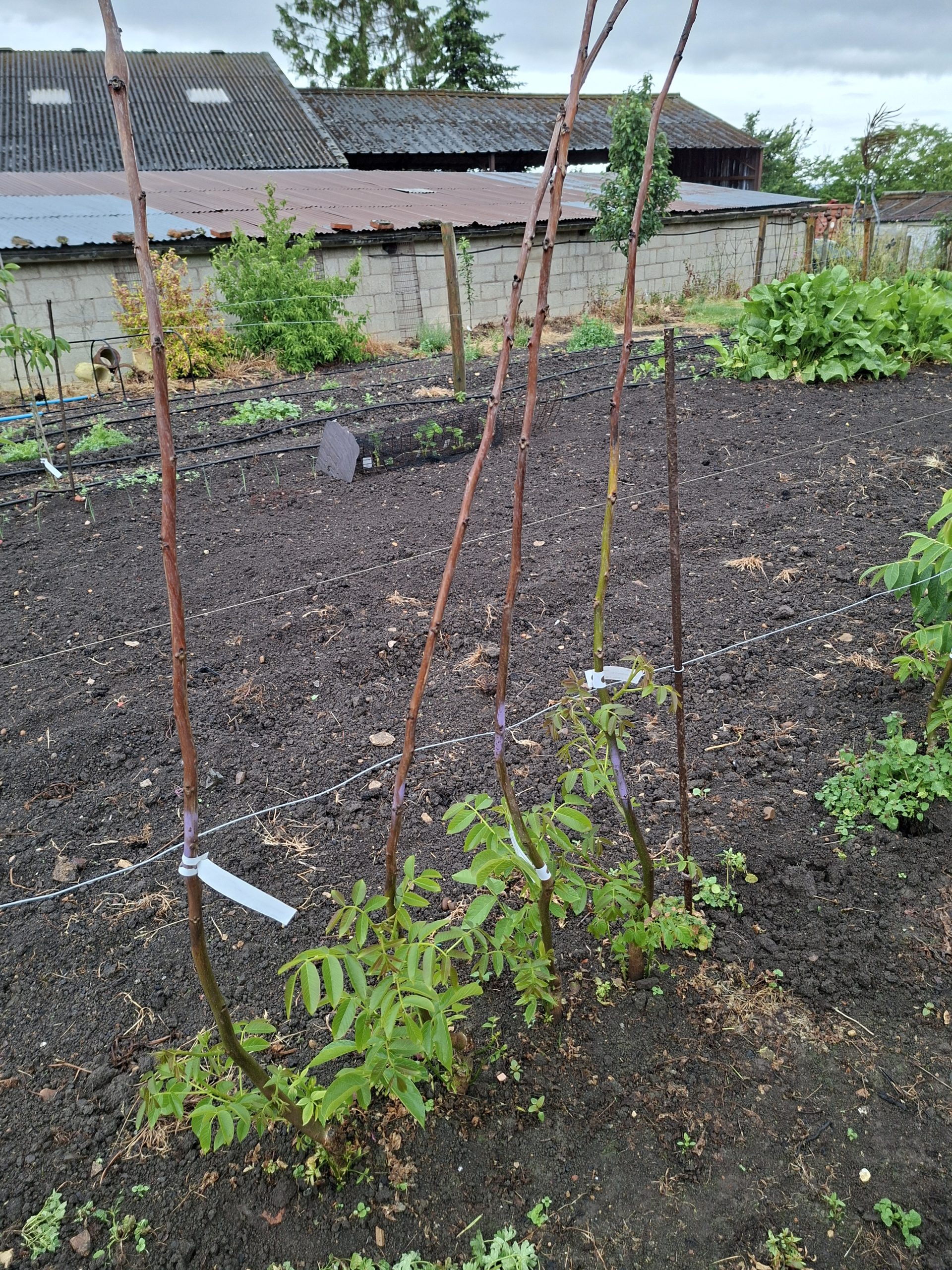
The images below show the state of the Tulare in a nursery bed and the difference between one that had sufficient moisture and two others that didn’t, shock has caused a lot of die back both below and above the graft union, rub off the ones below and keep the trees mulched and watered and it’ll catch up pretty quickly.

This kind of die back is how I know I’ve got the irrigation wrong early in the year in our orchards, drip irrigation is a life saver but it’s quite difficult to judge the moisture available even in parts of the field, let alone at each individual tree.
Spring 2026 Update

2nd June 2026

Spring this year has followed a continual recurring theme over the last 5-6 years, periods of wet early in the winter and then dry by spring time, last year from January this year from mid March.

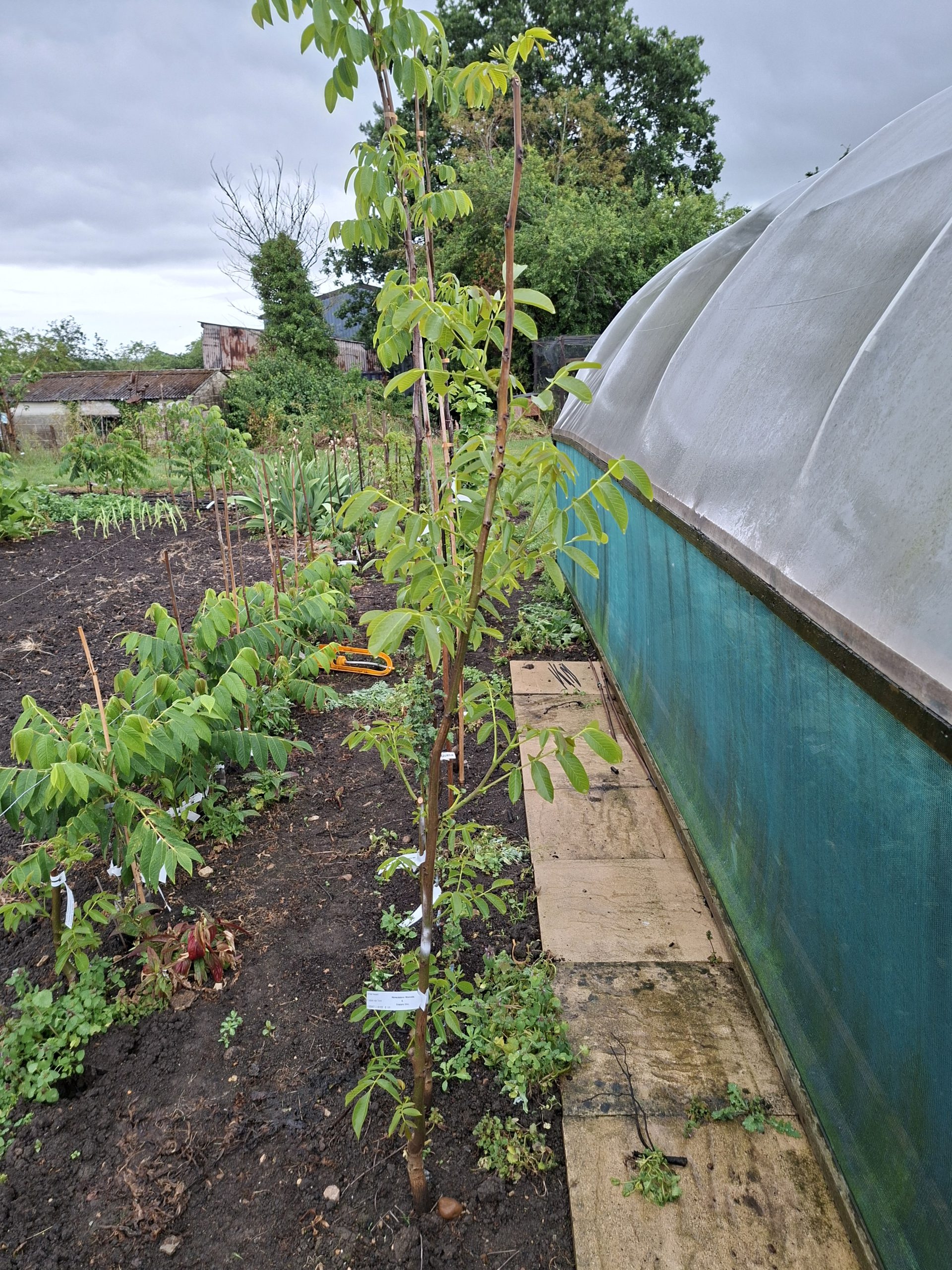
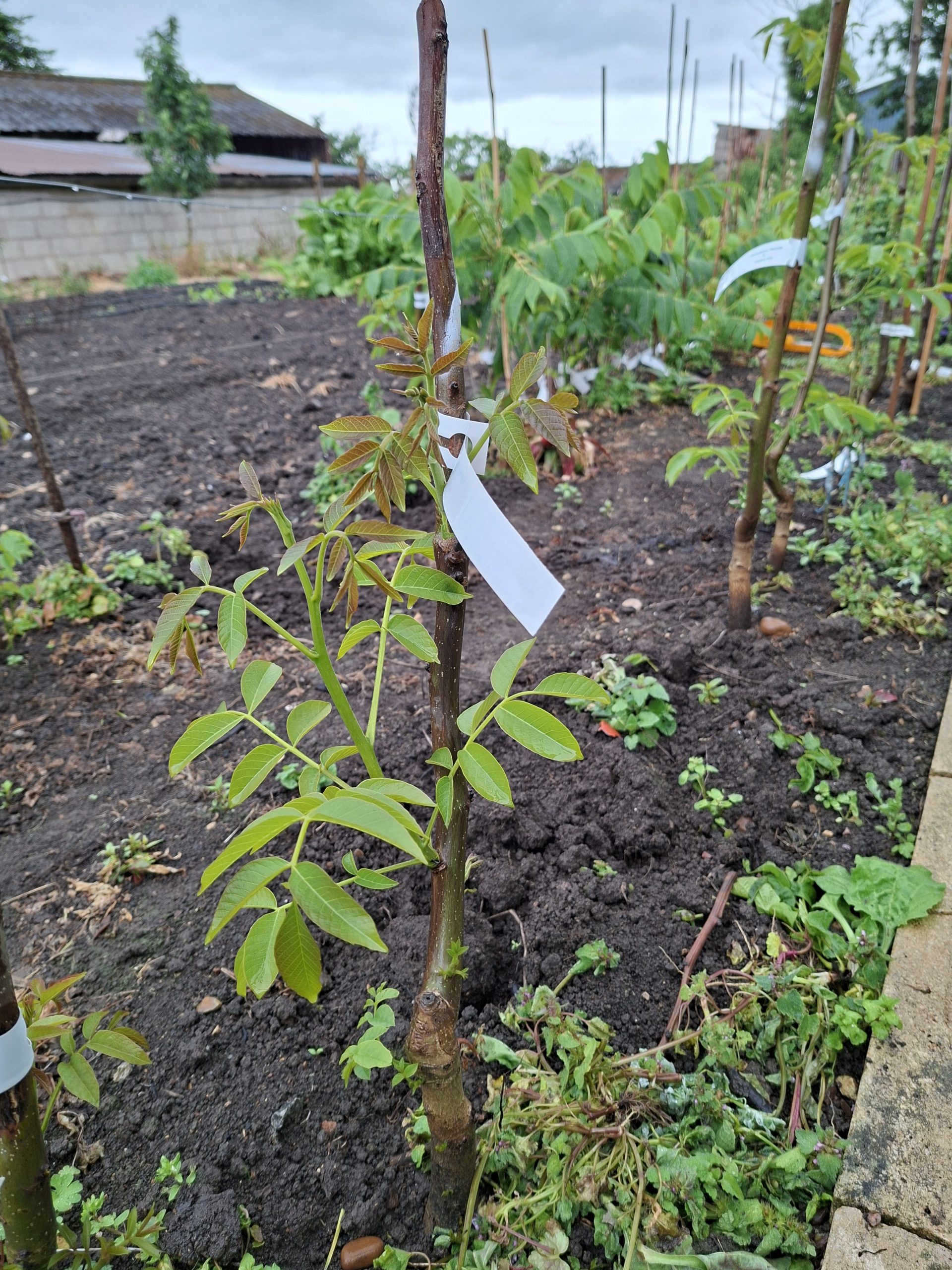
This has reinforced the absolute necessity of having irrigation in situ before planting as transplanted trees are very susceptible to drying out and once those roots have been compromised they rarely recover. I missed irrigating some replacements this year early on and they’re pretty much dead from the graft union upwards despite being planted in December and having 2 months of steady rain.

From our experience here on heavy clay rain just doesn’t penetrate as deep as you’d expect, especially after such a torrid drought last year, many cracks in the soil still weren’t closed by March so rainfall just disappeared, missing root systems completely.

Drip irrigation and mulch are essential if you can, walnuts should grow 2-4 feet a year after the first year, our newest orchard has had a terrible few years of record droughts and heat and the wettest year on record, this year I’m irrigating in rotation every day and it’s finally having a shot at getting really going.

For a change from the last few springs we’ve also had regular light frosts since early March with the last on 12th May, most were less than -1C and nothing harder than -1.9C but even zero can be enough to burn to foliage and catkins.  It’s stayed unusually cool especially at night from March until early May and although many had long broken bud full leaf cover has been very slow, 7-8 weeks for the early ones and Fernor is still only partly out, towards the end of June before full leaf and not flowering much yet.

In a month or so we’ll be able to tell how this has affected nut set but there are clearly less nuts on the early cultivars like Saturn and male catkins on some just fell off before maturing, Broadview as usual seems to have the most sensitive male flowers.

As previous years have indicated female flowering is later here than in most of Europe  so pollinators don’t work as expected, Lara amongst others is still flowering but the last male flowers finished a week ago, A117 Kesei seems to be the latest this year but next year we’ll have catkins on our new Meylanaise which should cover us until at least wk2 of June I hope.  Our late seedlings finished male flowers by the 26th May and some are still presenting female flowers, usually they have male ones as well so probably the frosts affected them as well.

On a more positive note we have actually had some rain in May, almost 2” (48mm) and 22mm last night so at least it’s trending better, although irrigation will continue as we’d need 3-4” in a week to really penetrate through the rock hard soil.